


Hafez and Rumi: At the Heart of Iran-Tunisia Literary and Civilizational Dialogue
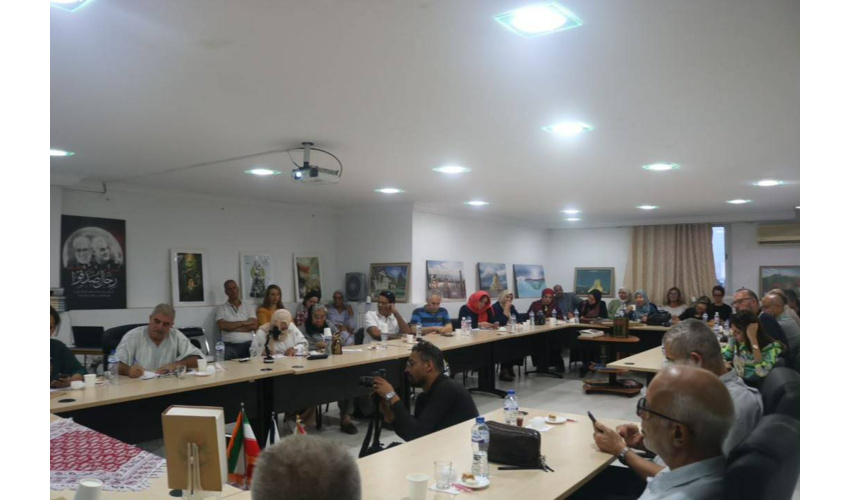
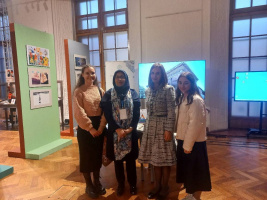
According to the Public Relations Department of the Saadi Foundation, the gathering, held to commemorate Hafez Shirazi and Jalal al-Din Muhammad Balkhi (Rumi), brought together a number of academics and researchers from the two countries to examine the perspectives of these two prominent Persian poets in relation to the philosophy of life, Islamic mysticism, ethics, psychology and the theory of love.
At the gathering, Jafar Morvarid, Iran’s Cultural Attaché and Saadi Foundation representative in Tunisia, and a professor at Ferdowsi University of Mashhad, delivered a speech entitled “The Philosophy of Life and the Crisis of Meaning,” examining the thoughts of Hafez and Rumi in the context of the challenges facing contemporary humanity.
Referring to Hafez’s aesthetic and love-centered worldview, as well as Rumi’s emphasis on living in the present moment and the inner transformation of human beings, he described their perspectives as valuable intellectual and spiritual resources for addressing the crisis of meaning in today's world. The condition of contemporary humanity in an age of information overload was another key theme of his presentation.
Meanwhile, Mir Masoud Hosseinian, Ambassador of the Islamic Republic of Iran to Tunisia, addressed the topic “Kairouan in the Poetry of Iranians,” examining how this historic Tunisian city has been reflected in the works and poems of Iranian poets.
In another presentation, Tawfiq Ben Amer, Professor of Arab and Islamic Civilization at the University of Tunis and President of the Tunisian Association for Sufi Studies, spoke on “Rumi’s Place in Islamic Mysticism.” He examined Rumi’s intellectual and spiritual transformation following his encounter with Shams Tabrizi and explained the significance of works such as Masnavi-ye Ma'navi and Divan-e Shams in the mystical and literary heritage of the Islamic world.
Referring to symbols such as the reed flute and the whirling dance in Rumi’s works, he also discussed the history of commemorating the poet at Tunisia’s Beit al-Hikma Foundation.
Mohamed Aziz Ben Zakour, a professor of Arab and Islamic Civilization, delivered a presentation entitled “Love for Society and the Critique of Hypocrisy,” exploring the concept of love and its connection with ethics and sincerity.
By comparing Hafez’s symbolic ghazals with Rumi’s allegorical poetry, he also examined the different ways in which the two poets expressed love and criticized social hypocrisy in their works.
Manal Al-Boushi, a university professor of psychology, delivered a speech entitled “The Psychology of Heritage and Resilience,” focusing on concepts such as suffering, loss and psychological resilience in the poetry of Hafez and Rumi. She also explored the relationship between these concepts and the spiritual and cultural experiences of Tunisian society, including the heritage associated with Sayyida Manoubia.
Mohammad Souri, a professor of Sufism and Islamic Mysticism and Director of the Research Institute of Islamic Philosophy and Theology, also spoke on “The Theory of Love in Early Texts.” He examined the textual and intellectual connections between Rahiq al-Tahqiq, by Mobarakshah Marvroudi, and Rumi’s Masnavi-ye Ma'navi, discussing the perspectives on the essence of love through five key themes.
At the end of the gathering, Tunisian students studying Persian recited several of Hafez Shirazi’s famous ghazals in both Persian and Arabic, including the ghazal beginning with the line “For years, my heart had sought the Jam-e Jam from us.”

Your Comment :