


First “Shahnameh Studies in Italy” Conference Held
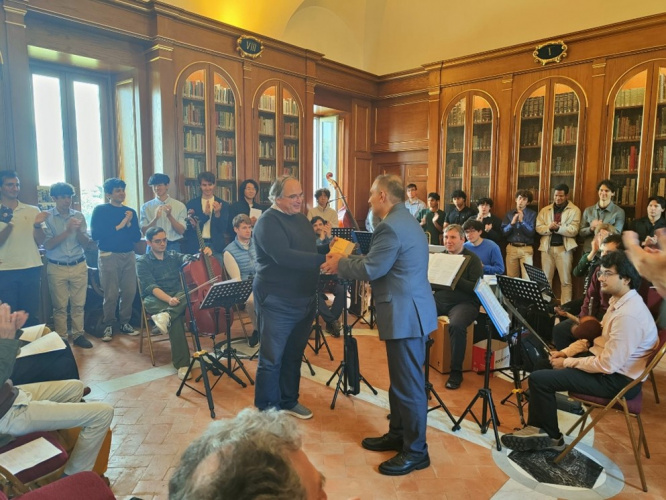
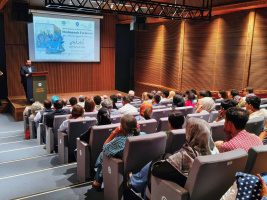
According to the Saadi Foundation’s Public Relations Office, the conference was organized in collaboration with Sapienza University of Rome, Ca’ Foscari University of Venice, the International Association for Mediterranean and Oriental Studies (ISMEO), and the Vivarium Academy. Approximately 80 professors, researchers, and enthusiasts of Persian language and literature attended the event.
During the ceremony, Majid Emami, Cultural Counselor of the Islamic Republic of Iran and representative of the Saadi Foundation in Italy, highlighted the significance of the Shahnameh in Iranian culture and civilization. He emphasized the role of classical and wisdom-centered literary works in fostering intercultural dialogue and strengthening mutual understanding among nations.
He noted that works such as the Shahnameh can play an important role in enhancing mutual awareness among peoples and shaping cultural dialogue in today’s world.
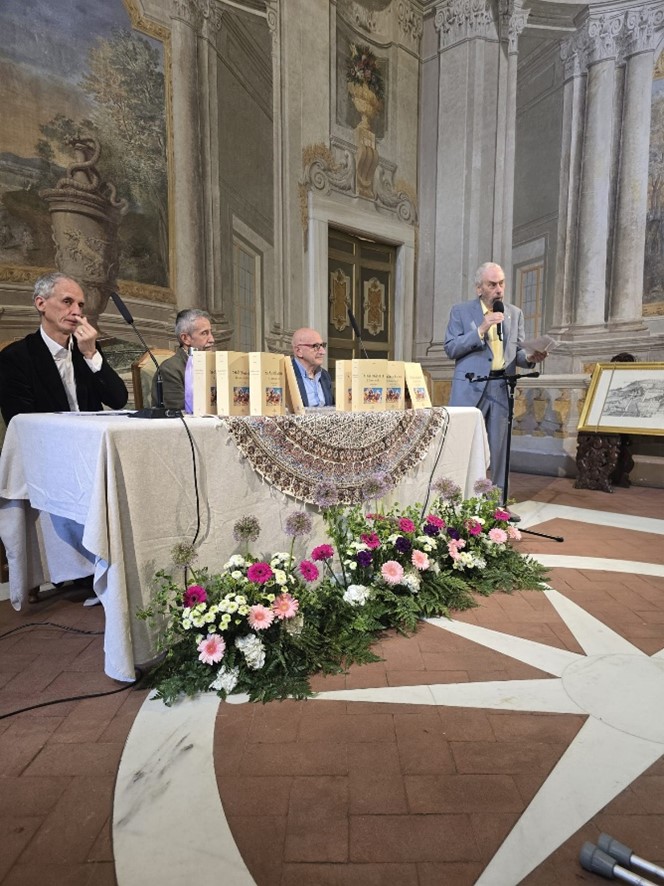
The conference also featured presentations by Cristoforetti from the University of Venice, Casari from Sapienza University of Rome, and Vitalone, who discussed the literary, cultural, and civilizational dimensions of the Shahnameh and its place in Iranian studies.
A number of university professors and Oriental studies specialists from Italian academic institutions also participated in the event, exchanging views on the research potential of the Shahnameh in literary and cultural studies.
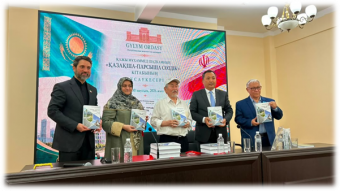
At the same time, the complete edition of Ferdowsi’s Shahnameh, published by LoNi Publishing, was officially unveiled. A copy of the work was donated by the Cultural Office of the Islamic Republic of Iran to the Vivarium Academy.
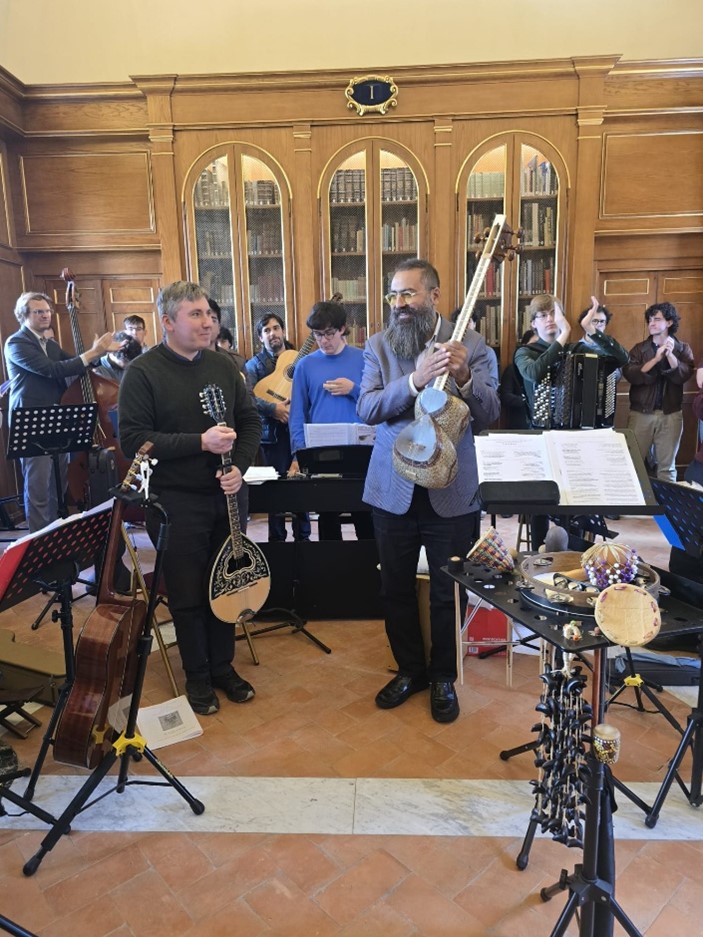
Between the different segments of the program, Hossein Sojoudi, an artist sent from Iran, performed selections of traditional Persian music.
The event concluded with a performance by the Vivarium Academy Choir.
Notably, the complete Italian edition of the Shahnameh, originally published nearly a century ago by the distinguished Italian Iranologist Italo Pizzi, had in recent years been accessible only through select libraries and specialized research centers. The renewed unveiling of the work was therefore intended to introduce it more broadly to Italian academic and Iranological circles. Copies of the publication were also donated to several Persian language departments and academic chairs across Italy.

Your Comment :