


Haddad-Adel in a Message to the Saadi Day Commemoration Ceremony in Egypt:
“Saadi Is a Teacher of Humanity and Ethics”
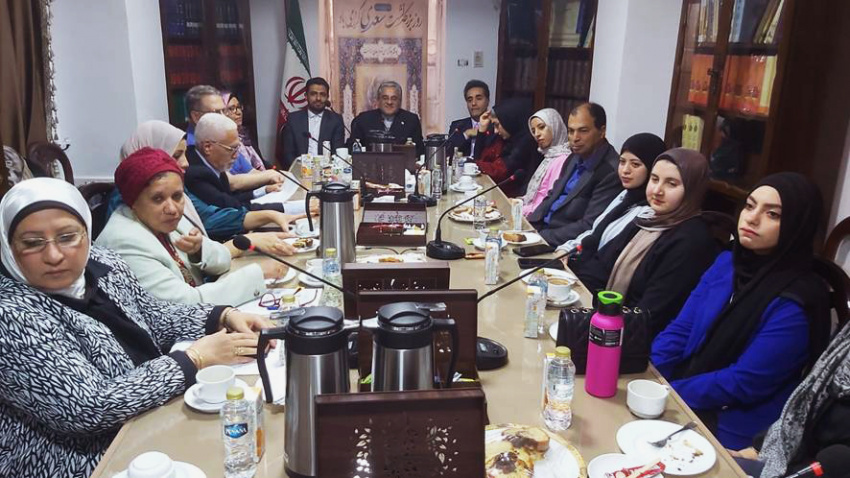
The head of the Saadi Foundation, in a message delivered on the occasion of Saadi Day commemorated in Egypt in the presence of Persian language professors and students, emphasized the educational and moral dimensions of Saadi Shirazi’s works, stating that “Saadi is a teacher of humanity and ethics.”
According to the Public Relations Office of the Saadi Foundation, Gholam-Ali Haddad-Adel, President of the Saadi Foundation, congratulated Egyptian professors, students, and researchers on Saadi Day in his message to the gathering.
He described Saadi as a widely traveled observer of humanity and a truthful thinker, adding that the simplicity and clarity of his expression, both in poetry and prose, are among the most important qualities of this great public educator.
Referring to the designation of the first day of Ordibehesht (April 21) as Saadi Day, Haddad-Adel stated that commemorating Saadi is not merely a tribute to his eloquent poetry and prose, but also a celebration of his ethics, wisdom, and profound role in human development.
He further noted that Saadi’s poetry can be approached from an educational perspective in order to discover and understand its moral and humanistic teachings, emphasizing the spiritual and ethical foundations embedded in his works.
Haddad-Adel also stressed that Saadi’s advice, inspired by the teachings of the Qur’an and Hadith, leaves a lasting impression on readers thanks to his eloquent and expressive language.
The President of the Saadi Foundation stated that Saadi’s distinctive “simple yet inimitable” style of expression contributed greatly to his widespread fame during his own lifetime. He added that the clarity and elegance of Saadi’s literary method made him a master teacher of the Persian language and literature, while the global admiration for his works led to the publication of numerous manuscripts and translations of Golestan and Boostan throughout the world.
He noted that Saadi’s international reputation also influenced the naming of the Saadi Foundation, which is responsible for promoting and teaching Persian language and literature to non-Persian speakers worldwide.
Congratulating Persian language professors and students in Egypt on this occasion, Haddad-Adel expressed hope that understanding Saadi’s words would help humanity apply his ethical and humanistic teachings toward building the ideal world envisioned by the poet.
Referring to the solidarity shown by the Egyptian people with the people of Iran, Haddad-Adel also recalled Saadi’s famous verse:
“Human beings are members of one body,
Created from the same essence.
If one member is afflicted with pain,
The others cannot remain at peace.”
During the ceremony, Mojtaba Ferdowsipour, Head of the Interests Section of the Islamic Republic of Iran in Egypt, discussed various dimensions of Saadi’s personality, including realism and practical ethics, balanced rationalism, humanism, peace-seeking, and intellectual freedom.
Davood Zarrinpour, Cultural Counselor of the Islamic Republic of Iran and Representative of the Saadi Foundation in Egypt, along with Persian language and literature professors Mohammad Noureddin Abdelmonem and Amir Jalali, also examined Saadi’s literary works and poetry.
In another part of the event, Egyptian scholars including Mona Hamed, Zeinab Bashar, Hoveyda Ezzat, and Yahya Dawood delivered speeches on the literary and personal characteristics of Saadi.
Other segments of the ceremony included the screening of video clips featuring the late martyred leader of the Islamic Revolution visiting Saadi’s mausoleum, poetry recitations, and a short documentary on the poet’s life and works.
At the conclusion of the event, several Egyptian professors were presented with gifts in recognition of their efforts to promote and expand Persian language and literature.


Your Comment :