

India’s move to include Persian as one of 9 classical languages widely hailed
By Mehdi Moosvi
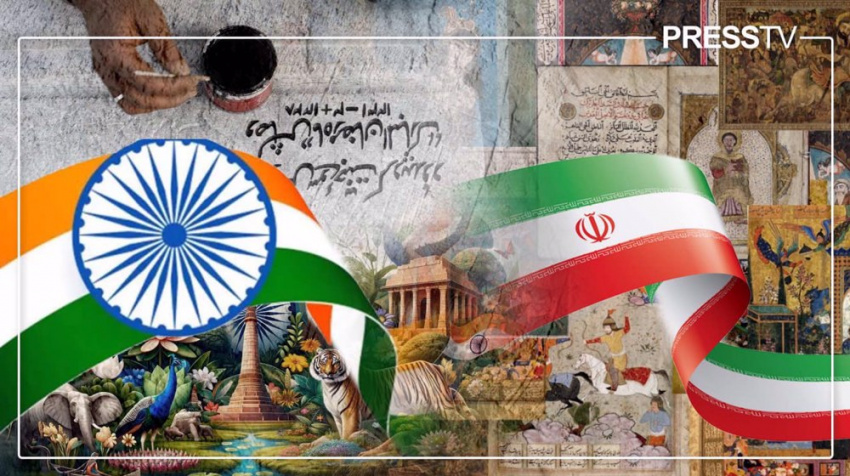
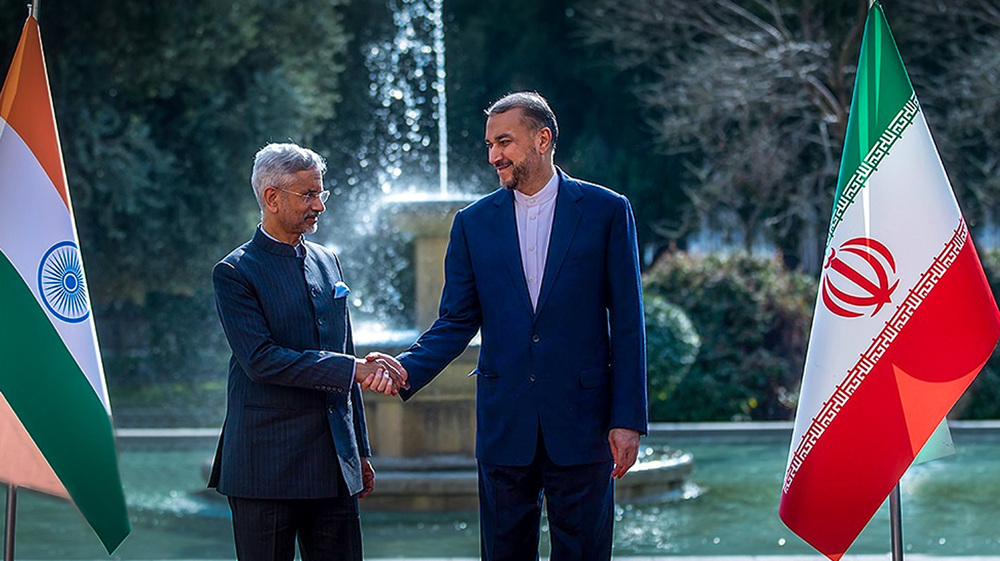
In a move that has brought cheer to the lovers of the Persian language in India, Indian External Affairs Minister S. Jaishankar last week announced the decision to incorporate it as one of the nine classical languages under the country’s New Education Policy.
"The government of India has decided to include Farsi as one of the nine classical languages of India in our New Education Policy," the top Indian diplomat remarked during his two-day visit to Tehran, while addressing a joint press conference with his Iranian counterpart, Hossein Amir Abdollahian, citing cultural, literary, and linguistic connections between Iran and India.
Indian ‘classical languages’ – or ‘Shastriya Bhasha’ – is an umbrella term used for languages of India with high antiquity and valuable, original, and distinct literary heritage.
The eight classical languages on the list presently include Tamil, Sanskrit, Kannada, Telugu, Malayalam, Odia, Pali, and Prakrit.
The latest acknowledgment comes as India aims to deepen cultural ties and recognize the cultural, literary, and linguistic connections between the two countries with historical ties, reflecting the dedication to promoting enhanced comprehension and admiration for the abundant cultural legacy of Farsi within the educational system of India.
A veteran Indian scholar of Persian language, Akhtar Mahdi, who teaches at the Centre for Persian and Central Asian Studies, Jawaharlal Nehru University (JNU), New Delhi, hailed the decision and said it augurs well for the cultural ties between the two countries.
‘Patronage to Persian lovers’
“India and Iran have maintained close cultural, literary, and linguistic connections from the prehistoric age and I hope that the decision will surely promote the bilateral ties between the two nations,” Professor Mahdi, who also served as a senior consultant of Persian at the Indira Gandhi National Open University, New Delhi, told the Press TV website, calling it a “good news” for Persian learners in India.
“More than 100 universities and colleges in India promote Persian studies at Ph.D. Level. Naturally, this decision will provide necessary patronage to lovers of Persian studies,” he hastened to add, referring to the passion for Persian in the world’s most-populated nation.
The addition of a language to the list of classical languages also indicates that the language becomes an optional subject for students to opt for as a secondary language in schools.
The chairperson of the Center of Persian and Central Asian Studies at JNU, and a bilingual poet of Persian and Urdu, Professor Akhlaq Ahan, also hailed the decision taken by the Indian government while speaking to the Press TV website.
He stressed that since most contemporary languages have linguistic as well as literary connections with the Persian language, Persian as an optional language in schools will “re-enthuse” cultural, historical, and literary relations between India and Iran.
“This will help reconnect with contemporary diction, besides enriching our (Indian) languages and literature, and will help to understand the literature of our languages, especially the classical literature and its text,” Professor Ahan stated.
S. M. Asghar, who teaches at the Department of Persian, Aligarh Muslim University (AMU) in northern India, also welcomed the move and said it will give a boost to the language in India.
However, he believes that Persian should not only be adopted as a classical language, but the Indian government should also introduce it in civil services examinations, through which top bureaucrats of the country are selected after rigorous procedures.
On the other hand, Professor Mahdi lauded the Indian government for providing all possible facilities and patronage for the development of Persian and lamented its present condition.
“There are a number of lapses in the appointment of Persian teachers and researchers, special attention should be paid in this regard so that proper classes are engaged by the qualified teachers,” he told the Press TV website.
Revival of Persian in India
The revival of Persian in India “will help Indian students to connect in a better way with their own languages and literature, especially to mention Sanskrit, Punjabi, Urdu, Hindi, Bengali, Marathi, Kashmiri, etc,” Professor Ahan told the Press TV website.
For a thousand years, people from Central Asia or a large region of Persia and Turkey have been regularly visiting India, even before the religion of Islam arrived, due to which there are similarities between India’s Sanskrit and Central Asia’s ancient Farsi or Avesta, he noted.
This cultural marriage of Hind-Farsi or Indo-Persian, evolved mostly in the 12th and 13th centuries, when thousands of people from Central Asia or Turkic region started arriving in India, and led to the establishment of the first Indo-Persian rule, the Delhi Sultanate.
“The Indian subcontinent is the center of the classical Persian language, but it is not spoken, instead, every Indian uses Persian words in their day-to-day lives, hence, no Indian will feel strange in Tehran, and no Iranian will feel alone in India, they’ll find so many common words,” the Persian scholar said.
“Persian has never been a foreign language in India because not only Hindi but all the Indian languages in one or other respect prove Persian impact.”
Not only the languages, he hastened to add, even the way of clothing, food, architecture, music, art, etc has been influenced by Persian culture, which also brought a pure form of Sufism to India.
As Foreign Minister Jaishankar said during his recent visit to Tehran, the “strong people-to-people connections have always been one of “greatest assets” for the two countries.
“Iran and India share deep cultural, literary, and linguistic ties, which provide a strong foundation for increasing exchanges of tourists, students, artists, athletes, and scholars,” he remarked.
Professor Ahan said Indian-Persian literature is slowly becoming popular in Iran and contemporary Persian poets are paying attention to the likes of Mirza Abdul Qadir Bedil, a great Indian Persian poet, whose books are considered the gospel of Persian literature in India.
Press TV’s website can also be accessed at the following alternate addresses: